01
45 days after launch, when I searched for Pay4SaaS on Google, two sublinks appeared below the main result: Introduction and Pricing Models.
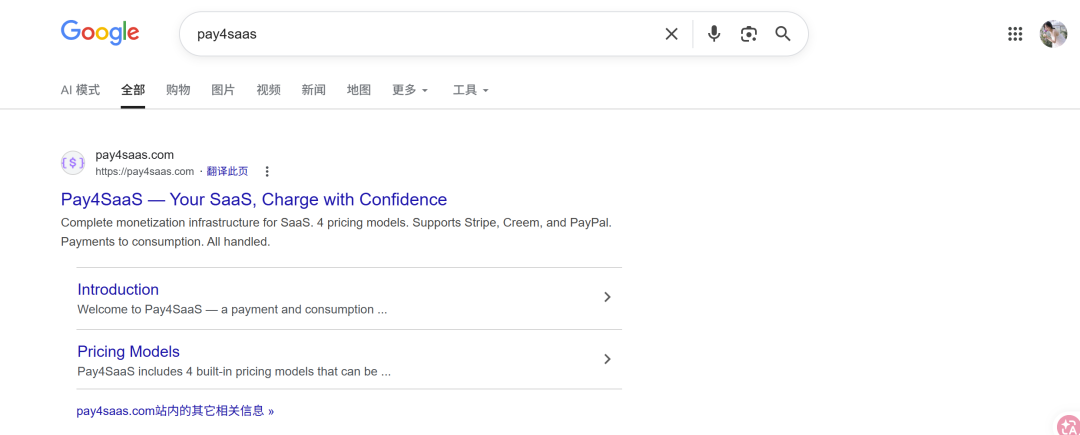
This feature is called Sitelinks. An indie developer friend told me his product site has been live for almost 2 years, and his search results still show just a single bare link. Today I'll talk about what Sitelinks are and how I got them.
02
What are Sitelinks?
Sitelinks are subpage links Google automatically displays below your main site link in search results. You can't apply for them or manually configure them—Google generates and decides them entirely on its own.
What's the value of Sitelinks?
When they appear, it means 3 things:
First, you occupy more search result real estate. With Sitelinks, your branded search result isn't just a single homepage link anymore. Users can click directly into docs, blog, or other important pages. Click-through rate naturally increases.
Second, stronger brand trust. Sites with Sitelinks look more professional. Users' first impression is "this product is being built seriously."
Third, Google's proactive endorsement. Sitelinks aren't something you ask for—Google only gives them when it thinks your site deserves this kind of display. Essentially, it's a form of preliminary quality validation.
How do you get Sitelinks? 4 points.
You can't manually apply, but you can create the conditions by doing a few things right:
-
Clear site structure. Google needs to understand your content hierarchy. Homepage, docs, and blog each serve their purpose. Navigation is clear, internal links are logical. Only then does Google know which subpages are worth recommending.
-
Basic SEO must be solid. Canonical tags (e.g., unified non-www domain, 301 redirect configuration), sitemap, robots.txt—these foundational configs need to be correct. Google needs to crawl your entire site smoothly to build a complete understanding of your site structure.
-
Brand search volume needs to accumulate. Sitelinks typically appear in branded search results. Enough people need to search your brand name for Google to think it's worth optimizing the display for that query.
-
Content quality must pass the bar. Sitelinks showcase the subpages Google thinks are most valuable to users. If your docs are clearly written and your blog has genuine content, Google will naturally surface them.
Worth noting: there are many tools now that can batch-generate SEO content. Sounds tempting, but the risk is high.
I recently saw a developer use automated SEO tools to batch-generate articles, and their traffic tanked.
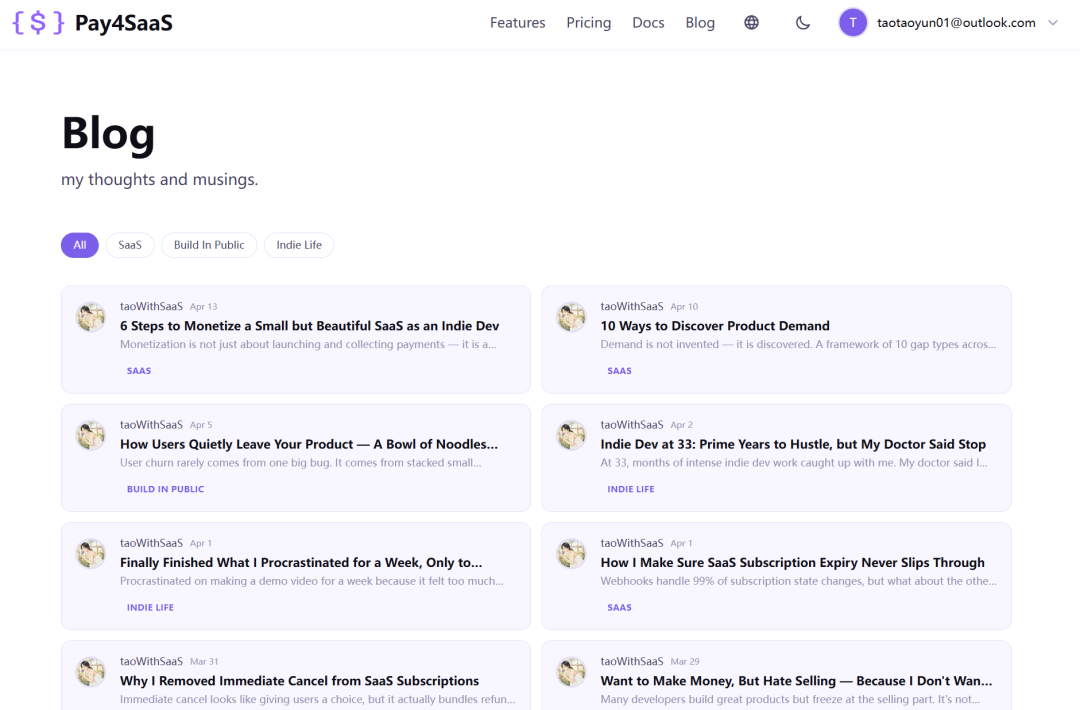
Google is increasingly capable of identifying low-quality batch content. Every post on my blog is real experience, real thinking, real decisions I've made. This kind of content is what Google loves to promote and reward.
03
Sitelinks appeared in 45 days. Honestly, a bit unexpected. But looking back, once I did the basics right, Google's feedback came much faster than expected.
For us, SEO doesn't need black magic or programmatic batch tactics. Lay a solid foundation, and let time do the rest.
Sitelinks are a good starting point and a signal—it means in Google's eyes, the site is already structured, content-rich, and trustworthy. Onward and upward.
Related posts
Browse all postsWhy Users Pay: The 3 Jobs Your Product Really Needs to Satisfy
Users do not pay only for features. Functional, emotional, and social jobs often stack together to make a product worth paying for, staying with, and sharing.
Directory Sites Are Everywhere, But the Valuable Ones Aren't Directories Anymore
Everyone's building directory sites, but the ones that actually make money have evolved beyond simple link aggregation. Here's what separates a disposable directory from a lasting brand.
I Thought API Reselling Was Easy Money — Turns Out It's a Dead End
I explored the idea of becoming an AI API reseller. It looked like easy money — until I realized it's a race to the bottom with serious compliance risks. Here's the smarter path.